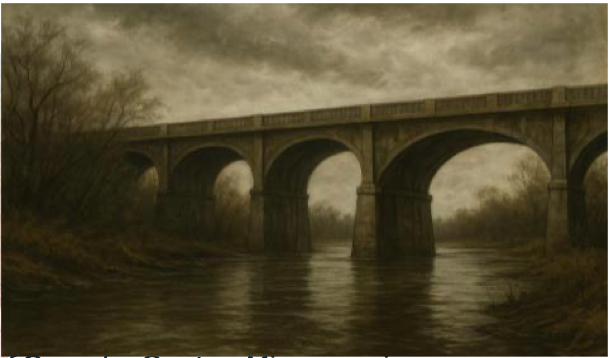
Flowing Through Time Along The Red River by Michelle Nguy

Purpose Statement
To engage students in critical, creative, and place-based inquiry about the Red River, exploring its environmental and colonial histories in order to develop scientific literacy, ethical awareness, and meaningful communication about water justice.
Project Goals
Develop scientific literacy through hands-on water testing and environmental analysis.
Cultivate place-based awareness and ecojustice thinking.
Encourage creative and reflective writing tied to land, memory, and possibility.
Build multimedia literacy through photography and digital publication.
Share youth perspectives on the future of water to the surrounding communities
About This Project
This project focuses on the Red River as both a vital body of water and a living archive of
ecological, historical, and cultural change.
Participants will explore the environmental transformation and water justice issues connected to the river using: photography, water sampling, writing and critical inquiry. By engaging with the Red River in the past, present, and imagined future, the project invites students to analyze its significance from scientific, historical, and socio-political perspectives.
Through water testing and microscopic analysis, participants will explore the ecological health of the river. They will also engage in reflective and creative writing that may include topics such as Indigenous knowledge, treaties, settler impact, and current environmental concerns. Photography and writing can be publicly shared through a community showcase and digital gallery, ensuring local and wider ripple effects.
This project is designed for grade 9 science and English language arts students, with
interdisciplinary collaboration between teachers in both subject areas.
Participants and their roles:
Students: Engage in scientific inquiry, creative and reflective writing, photography, and community-based learning.
Teachers: Co-plan and facilitate the inquiry across disciplines.
Other participants may include:
Community members: Indigenous educators and elders may be invited to offer place- based knowledge about the Red River’s significance.
School-based partners: Tech/media support staff and administrators help support photo exhibition and digital publishing.
Possible collaborators: Urban-rural partner class (cross-divisional) to compare two locations along the Red River.
Context
The project will take place in Winnipeg, Manitoba, along the Red River near the school
community. The Red River is not only geographically central to the city. It is also important to note that it is also spiritually, historically, and politically significant. It is the site of Indigenous knowledge and presence, Métis resistance, treaty relationships, and ongoing colonial impacts.
This project emphasizes the river not just as content but as co-teacher providing a source of knowledge and learning, a concept drawn from place-based education and land-based pedagogies. By being physically present at the river, students engage in sensory, experiential learning and build deeper relationships to land and water.
Figure 1: Three views of the Red River across time and scale.